
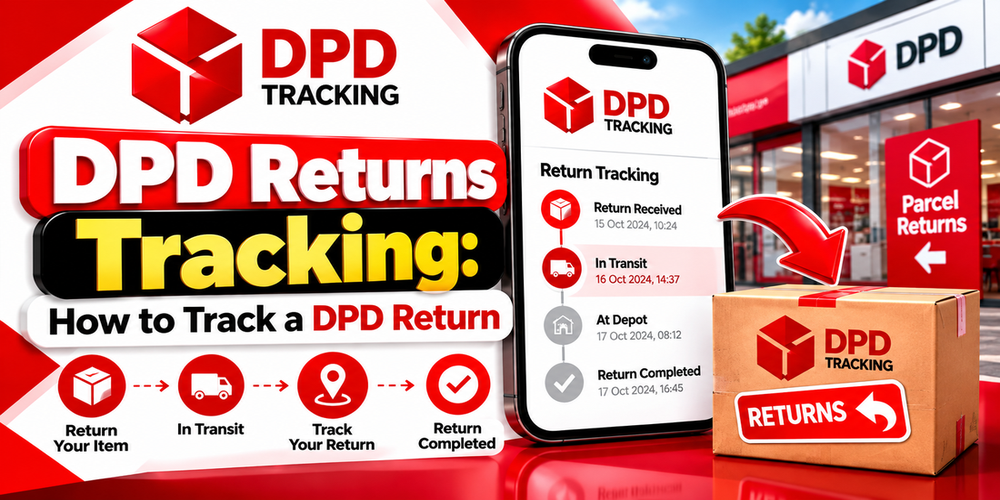
You get a tracking number as soon as a DPD return is booked, and DPD return tracking works the same way as tracking any outbound parcel. Most retailers now use a QR code return rather than a printed label, and DPD scans it in at the drop-off point to create the tracking record. The tracking starts from this scan, not when the retailer first sends you the QR code.
How Do You Create a DPD Return?
Start the return through the retailer, not DPD directly, since DPD doesn’t issue return labels on its own. The retailer’s returns page generates a QR code or a printable return label attached to the order. Some retailers ask for an email address and order number before issuing it; others link it straight from the order history. The return label or QR code is what DPD scans to book the parcel into its network, and that scan is the first entry DPD returns tracking will show.
Do You Need to Print a Return Label?
No, not with most UK retailers now. The QR code works on a phone screen at a DPD Pickup Shop, and staff print and attach the label there. This process only works at a staffed pickup shop, not at a locker. A locker return still needs a printed label attached beforehand.
Where Do You Drop Off a DPD Return?
Find the nearest DPD Pickup Shop at pickup.dpd.co.uk, then take the parcel and QR code there. Always check the finder before travelling, since some addresses printed on older labels may no longer accept DPD returns. Staff scan the QR code, print and attach the label, and hand over a receipt showing the tracking number.
A locker drop-off skips the staff scan entirely, so the tracking record only starts once the locker automatically logs the parcel, which can lag after the actual drop-off time. Keep the receipt until the refund shows up.
How Do You Track a DPD Return?
- To track a DPD return, enter the tracking number from your drop-off receipt on the DPD website. The process is the same as tracking a regular DPD delivery.
- Your DPD returns tracking information can show when the parcel was dropped off, scanned at a depot and sent towards the retailer. Tracking may not update immediately, so it’s normal for there to be a gap of a day or two between scans.
- Keep your tracking number somewhere safe, separate from the receipt. If the receipt is lost and your return goes missing, having the tracking number makes it easier to provide proof that the parcel was handed over.
How Long Does a DPD Return Take?
Transit back to the retailer typically takes 2 to 5 working days, depending on distance and how busy the network is. Once it arrives, the retailer still has to inspect the item before processing a refund, and many retailers quote around 14 days from arrival for that step. Peak periods, especially January returns after Christmas, can add extra time to both the transit and the inspection stages.
What Happens If a DPD Return Goes Missing?
- Report it to the retailer within 10 days of the drop-off date, since most return-insurance claims have that window and miss it entirely once it closes.
- Bring the tracking number and the drop-off receipt, since a missing scan in the tracking history is what proves the parcel was handed over to the amounter.
- Some retailers charge a small return fee, commonly £2 to £3, deducted from the refund; the amount is set by the retailer, not DPD, so check the specific return policy before assuming it applies.
Frequently Asked Question (FAQs)
Conclusion
Tracking a DPD return is much like tracking a normal delivery. You can use the tracking number on your drop-off receipt to check the parcel’s progress on the DPD website.
Many UK retailers now use a QR code instead of a printed return label. You simply show the QR code at a DPD Pickup Shop, where it is scanned when you hand over the parcel. Keep your receipt until you receive your refund. It’s your proof that the parcel was dropped off and can be important if the return goes missing during the claims period.